
A website can look modern, use beautiful visuals and still fail to turn visitors into customers. The difference often comes down to how the experience is designed.
UI/UX design is about more than colours, layouts and animations. It is about understanding how people interact with a digital product, what they need, where they get confused and what helps them take the next step.
A well-designed digital experience makes information easy to find, navigation simple and important actions clear. When user experience, visual design, performance and business goals work together, design becomes more than aesthetics — it becomes a tool for engagement and conversion.
In this article, we’ll explore how businesses can create user-focused, conversion-driven digital experiences that work for both their audience and their goals.
What Is UI/UX Design and Why Does It Matter?
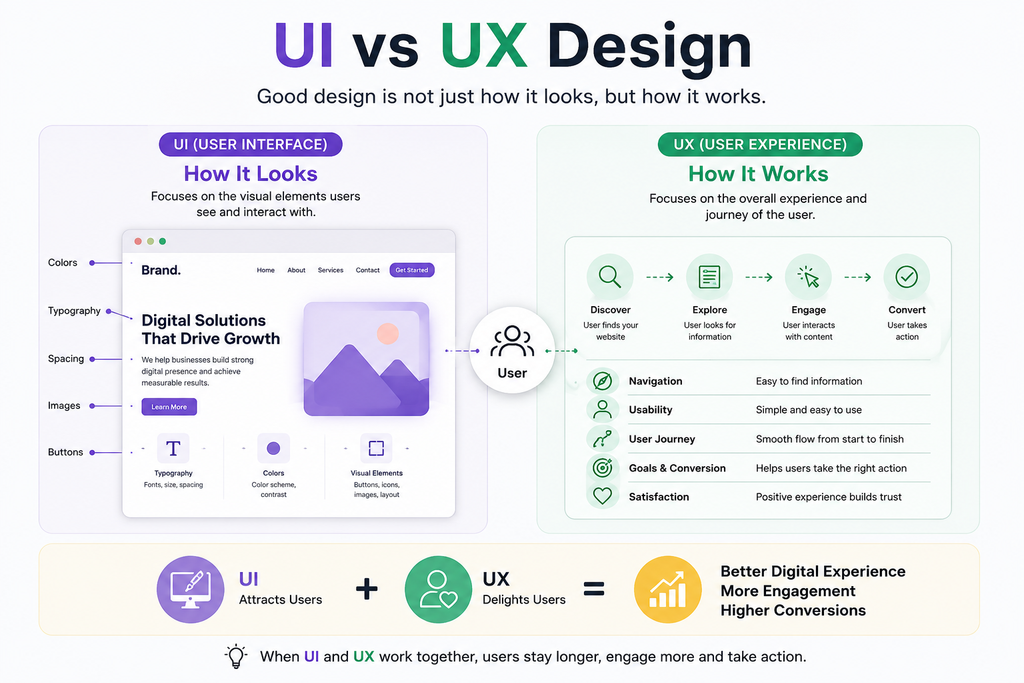
UI/UX design is the process of creating digital products and websites that are visually clear, easy to use and built around the needs of the user.
UI (User Interface) focuses on how a digital product looks — including layouts, colours, typography, buttons, icons and visual elements. UX (User Experience) focuses on how it works and feels — from finding information and navigating pages to completing an action such as submitting a form or making a purchase.
For a business, good UI/UX design can make the difference between a visitor who quickly leaves and one who stays, explores and takes action. A clear layout reduces confusion, intuitive navigation helps users find what they need, and well-placed calls to action can guide them towards the next step.
That’s why effective UI/UX isn’t simply about making a website look attractive. It’s about creating an experience that makes it easier for people to understand, trust and interact with your business.
How Good UI/UX Design Influences Conversions
A user may visit your website with a clear intention, but a confusing layout, difficult navigation or unclear CTA can quickly push them away. This is where good UI/UX design becomes important.
A conversion-focused experience removes unnecessary friction and helps users move naturally from discovering your business to taking action. Clear navigation helps them find information, visual hierarchy draws attention to important sections, and well-placed calls to action make the next step obvious.
For example, imagine a service website where a visitor wants to request a consultation. If the contact option is difficult to find, the form asks for unnecessary information and the page doesn’t clearly explain what happens next, the visitor may simply leave. A better UX would keep the information clear, place the CTA where it makes sense and make the enquiry process quick and straightforward.
Good UI supports this experience by making the interface clear, consistent and visually engaging, while UX ensures that the overall journey feels simple and purposeful.
The result is not just a better-looking website. A well-planned digital experience can improve engagement, usability, trust and conversion opportunities.
Key Elements of a Conversion-Focused UI/UX Design
A conversion-focused website doesn’t rely on design trends alone. Every visual and functional element should have a purpose — helping users understand the business, find what they need and take the next step without unnecessary friction.
Some of the most important elements include:
Clear Visual Hierarchy: Headings, spacing, images and typography should guide attention toward the most important information first.
Simple Navigation: Users should be able to find important pages and information without having to search through a complicated menu.
Strong Calls to Action: Buttons such as Get Started, Book a Consultation or Request a Quote should be clear, relevant and placed where users are most likely to need them.
Responsive Design: The experience should work smoothly across desktops, tablets and smartphones. A website that looks good only on a large screen can still lose potential customers.
Trust Signals: Reviews, testimonials, case studies, certifications and clear business information can reduce uncertainty and help users feel more confident about taking action.
Fast and Accessible Experiences: Pages should load efficiently, content should remain easy to read, and important interactions should be usable for as many people as possible.
The goal is not to add more design elements. It is to remove confusion and make every important interaction easier for the user.
Understanding Your Users Before Designing
Good UI/UX starts with understanding the people who will actually use the website. Before deciding on colours, layouts or buttons, businesses need to understand their audience, needs, expectations and pain points.
Look at questions such as:
- What is the user trying to achieve?
- What information do they need before taking action?
- Where might they get confused?
- What could stop them from completing the journey?
For example, a service-based business may have visitors who want to quickly understand the services, pricing approach and credibility before making an enquiry. If the website hides this information behind complicated navigation, users may leave before reaching the contact page.
Understanding user behaviour helps designers create experiences around real needs rather than assumptions.
The best digital experiences are designed for the user first, while keeping the business goal in mind.
Designing a Simple and Intuitive User Journey
Once you understand your users, the next step is to make their journey as simple as possible. A visitor should be able to move from landing on the website to finding information and taking action without unnecessary steps.
A good user journey usually answers three basic questions:
Where am I? → What can I do here? → What should I do next?
Clear navigation, logical page structure, readable content and well-placed CTAs help users move through the website naturally.
For example, if someone visits a digital marketing agency website, they should quickly understand what the agency offers, who it helps and how to get started. They shouldn’t have to visit multiple unrelated pages just to find a contact option.
A simple journey reduces friction, keeps users engaged and makes conversion easier.
Mobile-First and Responsive Design
With a large share of users browsing on smartphones, a digital experience should work smoothly across mobile, tablet and desktop devices. Mobile-first design means planning the experience for smaller screens first, then adapting it for larger ones.
A responsive website should keep navigation simple, text readable, buttons easy to tap and important content visible without unnecessary scrolling or zooming.
It also means checking practical details such as page speed, image sizes, touch-friendly elements and layout consistency across different screen sizes.
For example, if a visitor cannot easily find the CTA or read your service information on a phone, a visually impressive desktop design won’t help much.
Good responsive design makes the experience feel natural on every device — not like a desktop website squeezed onto a mobile screen.
Common UI/UX Mistakes That Hurt Conversions
Even a visually attractive website can lose potential customers when the user experience creates unnecessary friction. Some common mistakes include complicated navigation, unclear CTAs, too much information, inconsistent design and slow-loading pages.
Another common issue is designing mainly for appearance instead of understanding how users actually interact with the website. If visitors cannot quickly understand what a business offers, find important information or know what to do next, they are more likely to leave.
Poor mobile experience can also create problems. Small buttons, difficult forms, unreadable text or broken layouts can make even a strong website frustrating to use.
The solution is not adding more design elements. It is about removing friction, simplifying the journey and making every important interaction clear.
UI/UX Trends Shaping Digital Experiences in 2026
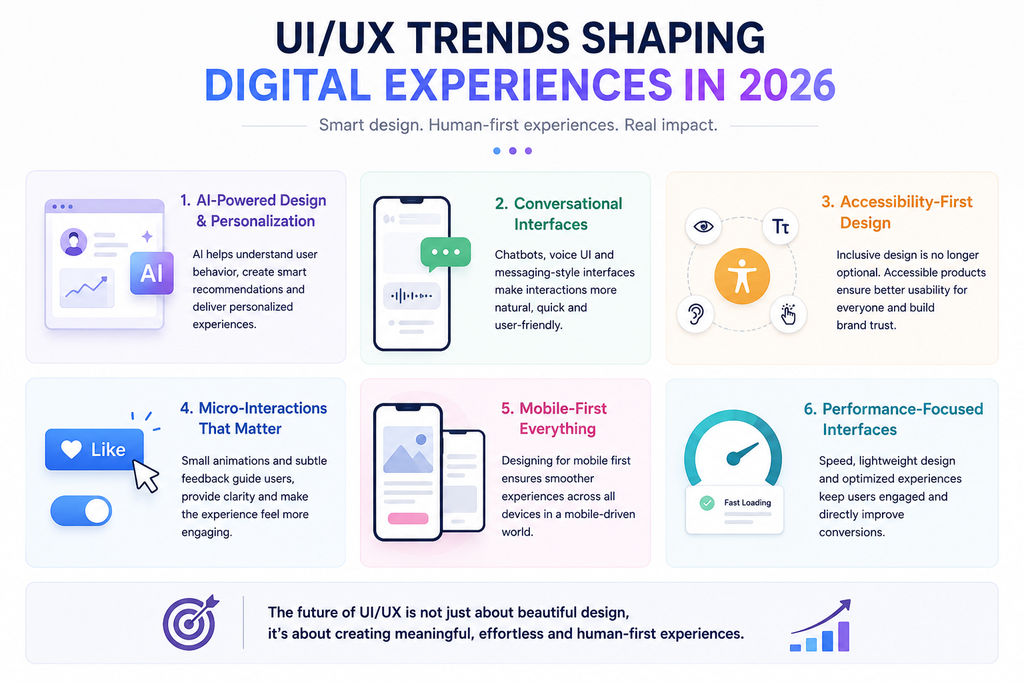
UI/UX design in 2026 is moving toward experiences that are simpler, faster, more accessible and more personalised. Businesses are focusing less on adding visual effects and more on making digital products genuinely useful.
Some important trends include AI-assisted design and personalisation, conversational interfaces, accessibility-first design, micro-interactions, mobile-first experiences and performance-focused interfaces.
AI can help designers analyse user behaviour, generate prototypes and test different design ideas faster. However, the final experience still needs human understanding of the user’s needs and the business objective.
Another important shift is toward purposeful design. Animations, transitions and interactive elements should support the experience rather than distract users.
The best 2026 designs aren’t necessarily the most complicated. They are the ones that make the user’s next step clear, fast and effortless.
How to Measure UX and Conversion Performance
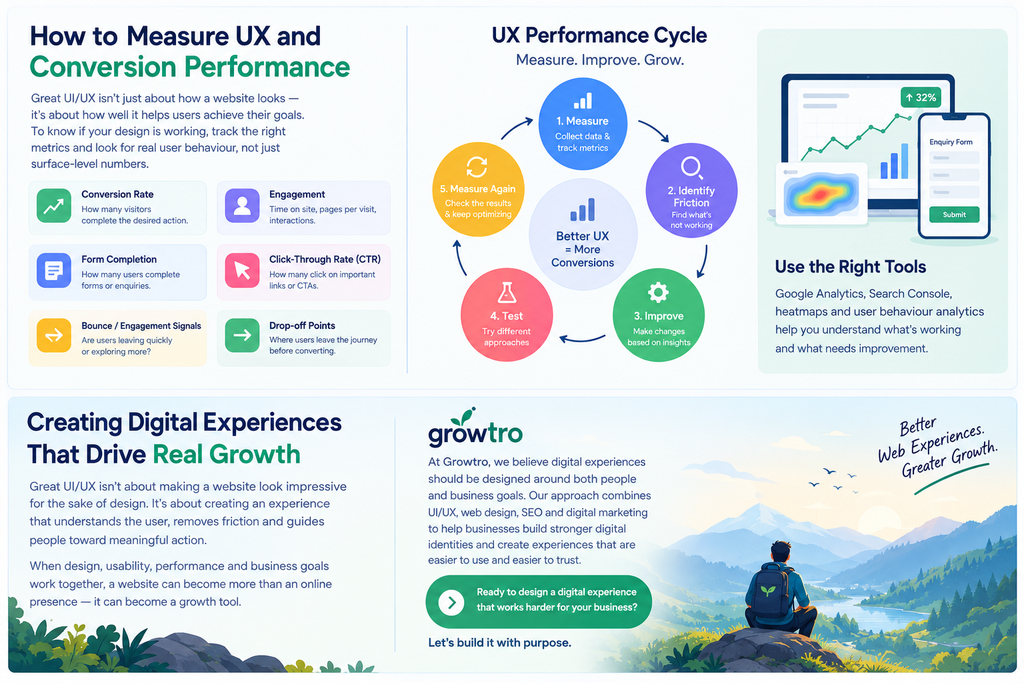
Good UI/UX should be measured by how well it helps users complete their goals, not only by how attractive the website looks.
Businesses can track metrics such as conversion rate, engagement, form completion, click-through rate, bounce/engagement signals and user drop-off points to understand where visitors are struggling.
For example, if a landing page receives plenty of traffic but very few visitors complete the enquiry form, the problem may not be traffic. The page structure, messaging, CTA or form experience may be creating friction.
Tools such as Google Analytics, Search Console, heatmaps and user behaviour analytics can help identify these patterns.
The process should be continuous:
Measure → Identify Friction → Improve → Test → Measure Again
Creating Digital Experiences That Drive Real Growth
Great UI/UX isn’t about making a website look impressive for the sake of design. It’s about creating an experience that understands the user, removes friction and guides people toward meaningful action.
From the first impression to the final conversion, every part of the digital journey should have a purpose. When design, usability, performance and business goals work together, a website can become more than an online presence — it can become a growth tool.
At Growtro, we believe digital experiences should be designed around both people and business goals. Our approach combines UI/UX, web design, SEO and digital marketing to help businesses build stronger digital identities and create experiences that are easier to use and easier to trust.
Ready to design a digital experience that works harder for your business? Let’s build it with purpose.
Ready to Create a Digital Experience That Converts?
Your website is more than a digital presence. It is often the first interaction people have with your business. With the right UI/UX design, user experience and conversion-focused strategy, that interaction can become a meaningful step toward growth.
At Growtro, we design digital experiences that bring together usability, visual design, performance and business goals.
Let’s create an experience your users enjoy — and your business can grow with.
Talk to Growtro about your next digital project.